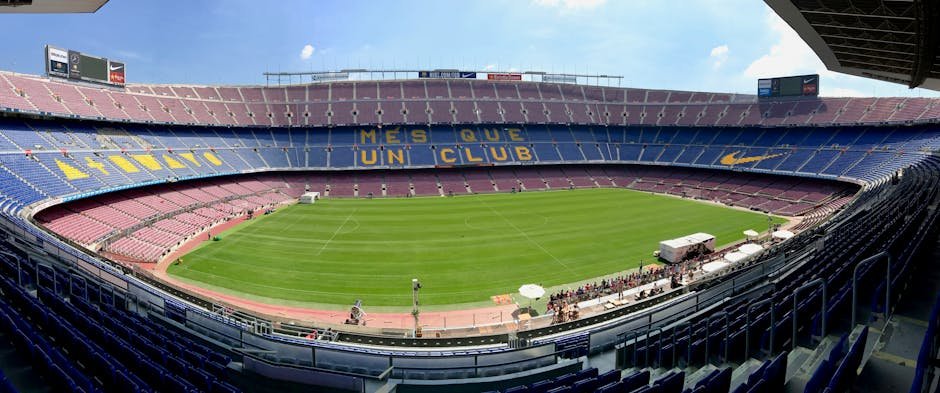
The ongoing presidential election at FC Barcelona finds itself under the immense shadow of Lionel Messi's future, with reports from outlets like Barca Universal speculating on the superstar's perceived stance amidst the fervent campaigning. This critical period will determine not only the club's leadership but potentially the fate of its most iconic player, all unfolding within the historic confines of Camp Nou, Spain.
Background to a Pivotal Election
FC Barcelona, more than just a football club, operates as a democratic institution owned by its members, known as 'socios.' This unique structure means that the club's president is elected by these members, holding significant power over its sporting, financial, and institutional direction. The current election is particularly charged, following a period of significant turmoil and financial instability.
The Bartomeu Era and its Aftermath
The preceding presidency of Josep Maria Bartomeu was marked by increasing controversy, culminating in his resignation in October 2020. His tenure saw a decline in sporting success, mounting financial debt, and a highly publicized breakdown in relations with key figures, most notably Lionel Messi. The nadir arrived in August 2020 when Messi submitted a 'burofax' expressing his desire to leave the club, citing clauses in his contract. Although he ultimately stayed for the 2020-21 season to avoid a legal battle with the club he loved, the incident laid bare the deep fissures within the institution.
Messi’s Contractual Quandary
Messi's decision to remain for the season meant his contract would expire in June 2021, making him a free agent. This contractual uncertainty became the central theme dominating the presidential race. Any incoming president would face the immediate and colossal task of convincing Messi to renew his deal, a challenge compounded by Barcelona's precarious financial state, estimated to be over €1 billion in debt. The club's reliance on Messi, both as a sporting force and a global brand ambassador, made his potential departure an existential threat.
The Interim Management Committee
Following Bartomeu's resignation, an interim management committee, led by Carles Tusquets, took charge. Their primary role was to oversee the club's day-to-day operations and organize the presidential election. This interim period further highlighted the club's financial woes, with salary cuts and urgent economic measures becoming necessary, underscoring the urgency for stable, long-term leadership.
Key Developments in the Race
The election campaign has been a fierce contest, with several prominent figures vying for the presidency. Each candidate has presented their vision for the club, but all campaigns inevitably circle back to the 'Messi question.'
The Leading Candidates and Their Promises
Three main candidates emerged as frontrunners: Joan Laporta, Victor Font, and Toni Freixa. Each presented distinct strategies for securing Messi's future and revitalizing the club.
Joan Laporta: The Return of a Familiar Face
Laporta, who previously served as president from 2003 to 2010, presided over one of Barcelona's most successful eras, which included Messi's rise to global superstardom. His campaign leveraged this nostalgia and his established relationship with Messi. Laporta consistently emphasized his belief that Messi trusts him and that his return would automatically create the conditions for the Argentine to stay. He promised a competitive sporting project and a robust financial plan to make Messi's renewal feasible. His narrative was one of restoring Barcelona's pride and glory, with Messi at its core.
Victor Font: A Vision for Modernization
Victor Font positioned himself as the candidate for a new era, focusing on a long-term, institutional project rather than relying solely on individual relationships. His 'Sí al futur' (Yes to the future) platform proposed a clear organizational structure, bringing in club legends like Xavi Hernández into key sporting roles. Font argued that Messi would be convinced by a solid sporting project and a clear roadmap for success, rather than personal ties. He detailed financial plans to stabilize the club and ensure Messi's contract could be afforded, emphasizing a sustainable approach.
Toni Freixa: Financial Prudence and Realism
Toni Freixa, a former board member under Laporta and Bartomeu, presented a more financially conservative and arguably pragmatic approach. He acknowledged the club's dire economic situation and suggested that Messi might need to accept a salary reduction to stay. Freixa focused on strict financial management and a realistic assessment of the club's capabilities, promising to build a competitive team within the existing financial constraints. His stance, while perhaps less romantic, aimed to address the stark economic realities.
Messi’s Public Silence and Media Speculation
Throughout the campaign, Lionel Messi maintained a public silence regarding his future or any preferred candidate. This neutrality, while understandable given his position, fueled intense speculation. Media reports, including those cited by Barca Universal, often attempted to interpret subtle cues or anonymous sources to gauge his leanings. Some reports suggested Messi was keen to see a strong sporting project, while others hinted at a preference for a president with whom he had a good past relationship. His silence effectively kept all candidates on their toes, forcing them to genuinely articulate their plans for him.
The Debate on Renewal Conditions
Beyond the candidates' promises, the actual conditions of Messi's potential renewal became a central point of discussion. The club's financial crisis meant that a contract similar to his previous exorbitant deal was likely unsustainable. Debates revolved around whether Messi would accept a reduced salary, a longer-term contract with deferred payments, or a role beyond his playing career. The candidates' ability to present a credible, financially viable, and attractive offer was paramount.
Impact of Messi’s Stance (or Silence)
Lionel Messi's presence, or the uncertainty surrounding it, has had a profound impact across various facets of FC Barcelona, influencing candidates, socios, and the club's overall trajectory.
Influence on Candidates and Campaign Momentum
The candidates' perceived ability to retain Messi became a primary differentiator. A candidate seen as having Messi's favour, or at least a credible plan to keep him, gained significant traction. Laporta, with his historical connection, often benefited from this perception. Font, by presenting a detailed sporting project involving Xavi, aimed to show Messi a compelling future. Freixa's more cautious approach, while fiscally responsible, might have been seen by some as less appealing to Messi. The election became a referendum on who could best convince Messi, making his future the ultimate campaign promise.
Impact on the Club’s Sporting Project
Messi's potential departure would necessitate a complete overhaul of Barcelona's sporting project. His unparalleled goal-scoring ability, playmaking, and leadership have been central to the team for over a decade. Without him, the club would need to invest heavily in new talent, reshape its tactical approach, and find new leaders. The election's outcome, therefore, directly dictated the scale and nature of this sporting transformation. A decision by Messi to stay would provide continuity, allowing the new president to build around him for at least a few more years.
Financial Ramifications for FC Barcelona
Financially, Messi's future is colossal. His salary, while substantial, is offset by the immense revenue he generates through shirt sales, sponsorships, global brand appeal, and ticket sales. His departure would not only free up a significant portion of the wage bill but would also lead to a substantial drop in commercial income. The new president's financial strategy, whether or not Messi stays, would need to address the club's massive debt while simultaneously ensuring competitiveness. Retaining Messi, even on a reduced salary, was viewed by many as a financially prudent move in the long run due to his marketability.
The Sentiment of the Socios and Fanbase
The socios, as the club's owners and voters, were deeply affected by the Messi saga. His potential exit was a source of immense anxiety and heartbreak. Their voting decisions were undoubtedly influenced by which candidate they believed offered the best chance of keeping Messi, coupled with a vision for restoring the club's glory. The emotional connection to Messi runs deep, making any candidate who could credibly promise his retention a powerful figure in the election. His presence is intrinsically linked to the club's identity and aspirations.
What Next for Barcelona and Messi
The resolution of the presidential election marks a critical juncture, but it is merely the first step in a series of anticipated milestones that will define FC Barcelona's immediate future and, crucially, Lionel Messi's career path.
The Election Outcome and New Presidency
The immediate aftermath of the election saw the announcement of the new president. This figure would instantly inherit the monumental task of addressing the club's financial woes and, most pressingly, initiating direct negotiations with Lionel Messi and his representatives. The transition period would involve forming a new board, appointing key sporting directors, and outlining the executive team's strategic direction. The initial days of the new presidency would be under intense scrutiny, particularly regarding any signals sent to Messi.
Direct Negotiations with Lionel Messi
Once the new president is formally in office, the focus will shift entirely to securing Messi's future. This will involve detailed discussions regarding the terms of a new contract. These negotiations are expected to be complex, encompassing not just financial figures but also the length of the contract, potential post-playing career roles, and, critically, assurances about the club's sporting project. Messi has consistently stated his desire to compete for major trophies, making the quality and ambition of the proposed team a key factor. The new president's ability to present a compelling vision that aligns with Messi's aspirations will be paramount.
The Summer Transfer Window and Squad Planning
Regardless of Messi's decision, the summer transfer window will be pivotal. If Messi stays, the new administration will need to recruit players who complement his style and strengthen the squad in key areas, all while navigating significant financial constraints. If he departs, the club faces the daunting challenge of replacing arguably the greatest player in history, requiring a strategic overhaul and potentially a significant investment in multiple players. The incoming sporting director, appointed by the new president, will play a crucial role in identifying targets and executing transfers.
Messi’s Ultimate Decision Timeline
Lionel Messi's contract officially expires on June 30, 2021. This date serves as a firm deadline for his decision. While he could theoretically wait until the very last moment, it is expected that clarity will emerge well before then, allowing both him and the club to plan for their respective futures. His decision will have far-reaching implications, not just for Barcelona but for the global football landscape, marking a potential end of an era at the club where he has spent his entire professional career. The months following the election will be filled with anticipation as the football world awaits the next chapter in the intertwined sagas of Lionel Messi and FC Barcelona.