The India Meteorological Department (IMD) has announced that the Southwest Monsoon is likely to commence over Kerala around June 4. This forecast indicates a slightly delayed but generally on-schedule onset for the crucial rainy season in the southern state. The anticipated arrival marks the official beginning of the monsoon's progression across the Indian subcontinent.
Background and Context of the Monsoon
The Southwest Monsoon is an atmospheric phenomenon of immense significance for India, acting as the lifeblood for its economy and ecosystem. Annually, it accounts for approximately 70-90% of the country's total rainfall, dictating agricultural productivity, replenishing water reservoirs, and influencing the livelihoods of hundreds of millions. Its timely and adequate arrival is crucial for the Kharif (summer) cropping season, which includes staples like rice, pulses, and oilseeds, directly impacting food security and inflation. Beyond agriculture, the monsoon is vital for hydroelectric power generation, groundwater recharge, and maintaining ecological balance across diverse regions.
The normal onset date for the Southwest Monsoon over Kerala is May 29, with a standard deviation of about seven days. This historical average serves as a benchmark for meteorologists and policymakers alike. A "normal" onset implies the establishment of specific atmospheric and oceanic conditions that signal the monsoon's arrival within this typical window. Deviations, whether early or late, can have ripple effects, prompting adjustments in agricultural planning and water management strategies.
The India Meteorological Department, the primary agency responsible for weather forecasting and meteorological observations in India, plays a pivotal role in monitoring and predicting the monsoon. The IMD employs a sophisticated suite of forecasting methods, including statistical models, dynamic models, and a detailed analysis of specific atmospheric and oceanic parameters. These models integrate vast amounts of data from satellites, weather stations, and ocean buoys to provide accurate and timely predictions. The IMD's forecasts are not merely weather reports; they are critical inputs for national planning, disaster preparedness, and economic policy-making.
Historically, the monsoon onset over Kerala has shown variability. While May 29 is the average, there have been instances of significantly early arrivals, such as May 18, 1990, and May 20, 2018, as well as notable delays, such as June 18, 1972, and June 12, 2019. Each deviation carries its own set of implications, from potential early sowing opportunities to concerns over initial dry spells for farmers. Understanding this historical variability helps in contextualizing current forecasts and preparing for potential scenarios.
The mechanism of the Southwest Monsoon is complex, driven by a combination of atmospheric and oceanic factors. It is primarily a result of the differential heating between the Indian landmass and the surrounding oceans. During the summer months, the land heats up much faster than the ocean, creating a low-pressure zone over the Indian subcontinent. This low-pressure system draws in moisture-laden winds from the Indian Ocean, particularly the Arabian Sea and the Bay of Bengal. The Intertropical Convergence Zone (ITCZ), a band of low pressure near the equator, shifts northward, further facilitating this wind flow. The Arabian Sea branch of the monsoon typically makes landfall over Kerala, while the Bay of Bengal branch moves towards Northeast India and then curves westward, bringing rain to various parts of the country. Kerala's geographical position as the southernmost state on the west coast makes it the natural gateway for the monsoon's initial entry into the Indian subcontinent.
Key Developments and Recent Changes
The IMD's latest forecast for the Southwest Monsoon to set in over Kerala around June 4 represents a slight deviation from the average onset date of May 29. While technically a delay, it falls within the normal variability range, which is typically considered plus or minus seven days from the average. This forecast is a refinement of earlier predictions and is based on the continuous monitoring of evolving atmospheric and oceanic conditions. The IMD had initially suggested a June 1 onset, but subsequent observations led to this updated projection.
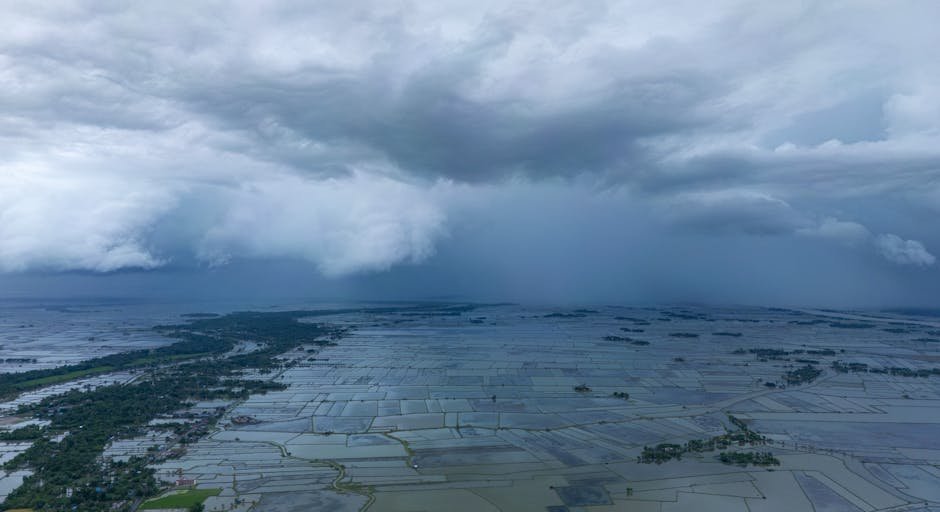
The IMD uses a set of five specific meteorological parameters to formally declare the monsoon's onset over Kerala. These parameters must be met concurrently to confirm the arrival of the rainy season:
Rainfall Onset Over Kerala
This is the most direct indicator. For the monsoon to be declared, at least 60% of the 14 designated meteorological stations in Kerala and Lakshadweep must report rainfall of 2.5 mm or more for two consecutive days after May 10. The effective date of onset is considered the second day, provided other conditions are also met. This criterion ensures a widespread and sustained precipitation event, characteristic of monsoon rains, rather than isolated pre-monsoon showers.
Depth of Westerlies
The depth of the westerly winds, which are a hallmark of the monsoon circulation, must be significant. Specifically, the depth of westerlies should extend up to 600 hectopascals (hPa) in the atmosphere, roughly 4.5 to 5 kilometers above sea level, over the region bounded by the equator to latitude 10°N and longitude 55°E to 80°E. This deep layer of westerly winds signifies the robust establishment of the monsoon current.
Out-going Longwave Radiation (OLR)
Out-going Longwave Radiation (OLR) is a measure of the energy radiated from the Earth’s surface and atmosphere back into space. Low OLR values (typically below 200 W/m²) indicate the presence of extensive, high-altitude clouds, which are associated with deep convective activity and heavy rainfall. For monsoon onset, the OLR value must be below 200 W/m² over the area bounded by latitude 5°N-10°N and longitude 70°E-75°E. This condition confirms the development of significant cloud cover and rainfall potential.
Heat Low Over Pakistan
A key driver of the monsoon is the intense heating of the Indian subcontinent. A low-pressure area, often referred to as a “heat low,” needs to be established over Pakistan. Specifically, the minimum sea level pressure over the region bounded by latitude 25°N-35°N and longitude 60°E-80°E should be 1000 hPa or less. This strong heat low acts as a powerful suction pump, drawing in the moist monsoon winds from the Arabian Sea.
Cross-Equatorial Flow
The cross-equatorial flow is crucial for transporting moisture from the Southern Hemisphere into the Northern Hemisphere, fueling the monsoon. The zonal wind component (east-west wind) at 850 hPa (approximately 1.5 km altitude) should be easterly over the region bounded by latitude 10°S-equator and longitude 55°E-80°E, and the magnitude of the zonal wind component should be 15 knots (about 28 km/h) or more over the region bounded by latitude 0-5°N and longitude 70°E-80°E. This indicates a strong northward flow of moisture-laden air across the equator.
In the days leading up to the forecast onset, Kerala has experienced sporadic pre-monsoon showers, which are typical for late May. These showers, while providing some temporary relief, are distinct from the sustained and widespread rainfall characteristic of the actual monsoon. Meteorological observations currently show strengthening westerly winds, increased cloudiness over the Arabian Sea, and a gradual reduction in sea surface temperatures (SSTs) in the southeastern Arabian Sea, all indicative of an impending monsoon arrival. The formation of a low-pressure area or cyclonic circulation in the Arabian Sea or Bay of Bengal often aids in the monsoon's progression, and such features are being closely monitored.
Comparing the current forecast to previous years, the June 4 arrival is similar to 2022, when the monsoon set in on May 29 (the normal date). In 2021, it arrived on June 3, and in 2020, it was June 1. The 2019 monsoon was notably delayed, arriving on June 8. This year's forecast, therefore, aligns with a trend of slight variability around the mean, rather than a significant anomaly.
Impact of Monsoon Onset
The arrival of the Southwest Monsoon over Kerala initiates a cascade of impacts across various sectors, profoundly influencing the state's economy, ecology, and daily life, before extending its reach across the entire Indian subcontinent.
Agriculture
Kerala’s agriculture is heavily reliant on monsoon rains. The Kharif season, which commences with the monsoon, is critical for the cultivation of staple crops such as rice (paddy). Farmers eagerly await the rains to begin sowing operations. Beyond rice, the monsoon supports the growth of cash crops like rubber, spices (cardamom, pepper, ginger), tea, and coffee, which are significant contributors to the state’s economy. A timely and adequate monsoon ensures optimal soil moisture, leading to healthy crop yields and higher incomes for farmers. Conversely, a delayed or deficient monsoon can lead to delayed sowing, reduced yields, increased irrigation costs, and ultimately, financial distress for the agricultural community. The economic impact extends to the national level, influencing food prices and overall agricultural output.
Water Resources
The monsoon is the primary source of replenishment for Kerala’s extensive network of reservoirs and dams. These water bodies are crucial for supplying drinking water to urban and rural populations, as well as for meeting the irrigation needs of agriculture. The rains also play a vital role in recharging groundwater tables, which are essential for borewells and wells used by millions. Sufficient monsoon rainfall helps in mitigating potential water scarcity during the dry seasons, ensuring continuous supply for human consumption, livestock, and industrial uses.
Hydroelectric Power Generation
Kerala relies significantly on hydroelectric power, with a substantial portion of its electricity generated from hydel projects. The monsoon rains directly feed the reservoirs of these power plants, ensuring adequate water levels for sustained power generation. A robust monsoon translates to lower dependence on thermal power, reduced electricity costs, and a more stable power supply for households and industries. A weak monsoon, however, can lead to power shortages, increased reliance on more expensive alternative energy sources, and potential power cuts.
Economy and Public Life
The overall state economy is deeply intertwined with the monsoon’s performance. A good monsoon often correlates with higher agricultural output, which stimulates rural demand and contributes to overall GDP growth. Food inflation tends to remain in check with abundant harvests. Conversely, a poor monsoon can trigger inflationary pressures, particularly on food items, and dampen economic sentiment.
Public life also undergoes significant changes with the monsoon's arrival. While bringing relief from the pre-monsoon heat, the heavy rains can pose challenges. Transportation networks, including roads, railways, and sometimes even air travel, can be disrupted due to waterlogging, landslides (especially in hilly areas like the Western Ghats), and reduced visibility. Urban areas often grapple with drainage issues, leading to localized flooding. Health concerns also emerge, with an increased risk of water-borne diseases like dengue and malaria. State and local authorities initiate preparedness measures, including clearing drains, issuing advisories, and readying disaster response teams. The tourism sector, a major revenue earner for Kerala, also experiences a shift, with some preferring the lush green landscapes of the monsoon, while others might defer travel due to weather-related inconveniences.
Environment and Ecosystems
From an environmental perspective, the monsoon rejuvenates Kerala’s rich biodiversity. The rains breathe new life into forests, grasslands, and wetlands, supporting a diverse array of flora and fauna. Rivers swell, carrying nutrients and supporting aquatic life. The Western Ghats, a UNESCO World Heritage site and a global biodiversity hotspot, thrive during the monsoon, showcasing vibrant greenery and cascading waterfalls. However, excessive rainfall can also lead to soil erosion and, in extreme cases, landslides, impacting natural habitats and human settlements alike.
In essence, the monsoon's onset over Kerala is not just a meteorological event; it is a cultural, economic, and ecological touchstone, setting the stage for the rest of the country's rainy season.
What Next: Expected Milestones and Outlook
Following the IMD's forecast, the next crucial step will be the formal declaration of the monsoon's onset over Kerala. This declaration will be made once all five specified meteorological parameters – sustained rainfall over designated stations, adequate depth of westerlies, low Out-going Longwave Radiation (OLR), establishment of a heat low over Pakistan, and strong cross-equatorial flow – are observed and confirmed for two consecutive days. This official announcement typically comes from the IMD's regional meteorological centre in Thiruvananthapuram and is widely disseminated through media channels.
Once the monsoon establishes itself over Kerala, it embarks on its northward journey across the Indian subcontinent. The progression of the monsoon follows a fairly predictable pattern, although its speed and intensity can vary from year to year. After Kerala, the monsoon typically advances into parts of Karnataka, Tamil Nadu, and the northeastern states. By mid-June, it usually covers Maharashtra, Goa, and parts of Central India. The monsoon then extends its reach to North India, including Delhi, Punjab, and Haryana, usually by the end of June or early July. The entire country is generally covered by the monsoon by mid-July. This progression is monitored daily by the IMD, which issues regular updates on the 'Northern Limit of Monsoon' (NLM) to track its advancement.
Beyond the immediate onset, attention will turn to the IMD's long-range forecast for the entire monsoon season (June to September). The IMD has already issued its initial outlook, indicating that the country is likely to receive "normal" rainfall during the 2023 Southwest Monsoon season, with rainfall expected to be 96-104% of the Long Period Average (LPA) of 87 cm. However, this forecast carries a significant caveat regarding global climate phenomena. The current ENSO-neutral conditions in the equatorial Pacific Ocean are expected to transition to El Niño conditions during the latter half of the monsoon season. El Niño, characterized by warmer-than-average sea surface temperatures in the central and eastern Pacific, is historically associated with a weakening of the Indian monsoon and can lead to below-normal rainfall. The IMD will closely monitor the development of El Niño and its potential impact on rainfall distribution, particularly during August and September. Another influencing factor is the Indian Ocean Dipole (IOD), which is currently in its neutral phase but could transition to a positive phase, potentially counteracting some of El Niño's negative effects.
In anticipation of the monsoon, various preparedness measures are already underway across states. State governments, particularly those prone to floods and landslides, are activating their disaster management plans. This includes pre-positioning relief materials, identifying vulnerable areas, clearing drainage systems, and coordinating with emergency services. Agricultural departments are issuing advisories to farmers regarding appropriate crop choices and sowing schedules based on the monsoon forecast. Public awareness campaigns are also being launched to educate citizens on safety measures during heavy rainfall and potential natural hazards.
The IMD and other meteorological agencies will continue their rigorous monitoring of weather patterns, sea surface temperatures, and atmospheric conditions throughout the monsoon season. Regular updates and short-range forecasts will be issued to provide localized and timely information to the public, farmers, and disaster management authorities, ensuring informed decision-making and preparedness for the critical rainy months ahead.