During his recent visit to the Netherlands, Prime Minister Narendra Modi toured the iconic Afsluitdijk Dam, a monumental structure that stands as a testament to Dutch engineering prowess in water management. This visit highlighted the dam's historical significance, its ongoing modernization, and its relevance as a global symbol of resilience against rising sea levels and climate change.
Background: A Nation Forged by Water
The Afsluitdijk is more than just a dam; it is the cornerstone of the ambitious Zuiderzee Works, a colossal hydraulic engineering project initiated in the early 20th century to protect the Netherlands from devastating floods and reclaim land from the sea. For centuries, the low-lying nation, with much of its land below sea level, battled the unpredictable forces of the North Sea, often suffering catastrophic losses of life and land.
The Visionary Cornelius Lely
The concept of closing off the Zuiderzee, a large shallow inlet of the North Sea, was first proposed in 1891 by civil engineer Cornelis Lely. His visionary plan aimed to transform the saltwater Zuiderzee into a freshwater lake, the IJsselmeer, thereby creating new agricultural land through polderization and significantly enhancing flood protection for the central Netherlands. Despite initial skepticism and immense technical challenges, the plan gained political momentum following a devastating flood in 1916.
Construction of a Modern Wonder
Construction of the Afsluitdijk commenced in 1927. The project involved an unprecedented scale of engineering and human effort. Over 5,000 workers toiled under challenging conditions, battling strong currents, tides, and harsh weather. The dam was primarily built using boulder clay, a glacial deposit that provided a stable foundation, reinforced with basalt rocks and fascine mattresses (zinkstukken) sunk to the seabed. These mattresses, made of woven willow branches, were weighted down with rocks and clay to create a stable base.
The 32-kilometer-long dam effectively sealed off the Zuiderzee from the Waddenzee (Wadden Sea), a UNESCO World Heritage site known for its rich biodiversity. The closure, or "sluiting," occurred on May 28, 1932, an event that marked a pivotal moment in Dutch history and global engineering. The completion of the Afsluitdijk transformed the Netherlands' geography and its relationship with water.
Initial Purpose and Impact
Upon its completion, the Afsluitdijk served several critical purposes. Foremost was flood protection, safeguarding vast areas of the Netherlands from the North Sea's storm surges. Secondly, it facilitated the creation of the IJsselmeer, a vital freshwater reservoir used for drinking water, agriculture, and industrial purposes. Thirdly, it enabled the reclamation of fertile land through the creation of four large polders: Wieringermeer, Noordoostpolder, Oostelijk Flevoland, and Zuidelijk Flevoland, adding over 1,650 square kilometers to the country's landmass. Finally, the dam provided a crucial road link, the A7 motorway, connecting the provinces of North Holland and Friesland, significantly reducing travel times and fostering regional economic development.
Key Developments: Modernizing a Century-Old Icon
Nearly a century after its completion, the Afsluitdijk faces new challenges, primarily from climate change and the need for enhanced sustainability. Recognizing its critical role, the Dutch government initiated a comprehensive upgrade and modernization program, transforming the dam into a future-proof example of integrated water management, energy generation, and ecological restoration.
Enhanced Flood Protection
The primary objective of the current upgrades is to bolster the dam's flood defense capabilities against projected sea-level rise and more extreme weather events. The dam's height is being raised by two meters, and its outer layer is being reinforced with new, innovative cladding materials designed to withstand more powerful waves. These reinforcements ensure that the Afsluitdijk continues to meet the highest safety standards for the coming decades, protecting millions of Dutch citizens.
Increased Discharge Capacity
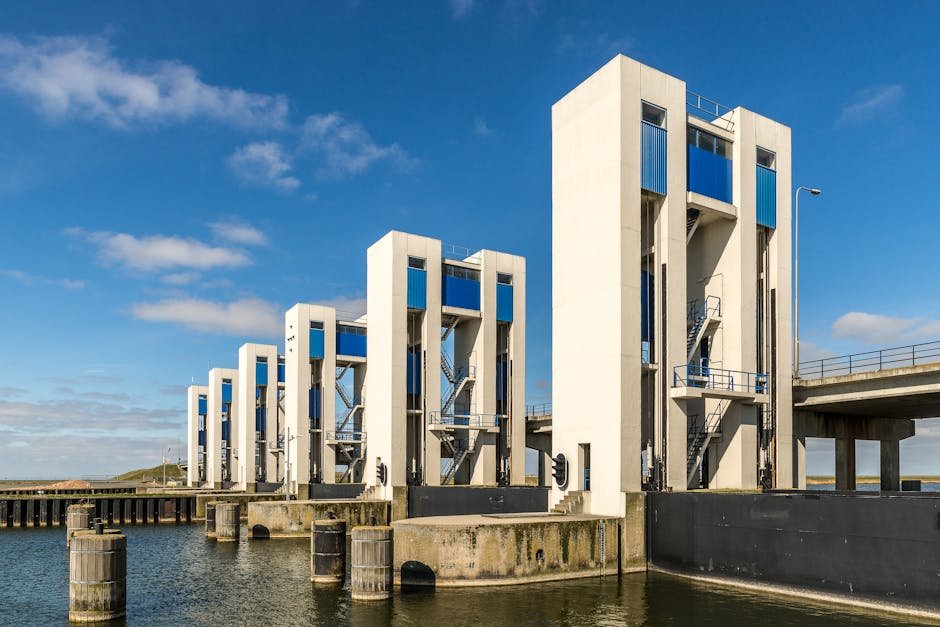
With rising sea levels in the Waddenzee and increased rainfall inland, the IJsselmeer's water levels need careful management. The existing discharge sluices at Den Oever and Kornwerderzand, which release excess freshwater from the IJsselmeer into the Waddenzee, are being expanded and modernized. New pumping stations, including the upgrade of the Lorentz Pumping Station, are being installed. These powerful pumps will supplement gravity-driven discharge, ensuring efficient water management even during periods of high tides in the Waddenzee, preventing flooding in the IJsselmeer basin.
Sustainable Energy Generation
The modernization project integrates renewable energy solutions, positioning the Afsluitdijk as a sustainable energy hub. Hydroelectric turbines are being installed to harness the difference in water levels between the IJsselmeer and the Waddenzee during discharge, generating clean electricity. Additionally, pilot projects explore tidal energy generation and the integration of solar panels along the dam, contributing to the Netherlands' renewable energy targets.
The Fish Migration River
A groundbreaking ecological development is the creation of the "Fish Migration River" (Vismigratierivier). The Afsluitdijk, while a marvel of engineering, effectively blocked the migration routes for fish species between the freshwater IJsselmeer and the saltwater Waddenzee. The Fish Migration River, scheduled for completion in 2025, is a unique, semi-open structure designed to allow fish to migrate naturally. It features a gradual salinity gradient, enabling fish to acclimatize as they move between the two distinct ecosystems. This innovative solution aims to restore biodiversity and support fish populations critical to the Waddenzee's delicate ecosystem.
Smart Infrastructure and Research
The upgraded Afsluitdijk incorporates advanced sensor technology and data analytics for continuous monitoring of its structural integrity, water levels, and environmental conditions. This "smart infrastructure" approach allows for predictive maintenance, optimized operations, and serves as a living laboratory for research into climate adaptation and water management solutions, contributing to global knowledge sharing.
Impact: A Global Model for Resilience
The Afsluitdijk's enduring legacy and its ongoing modernization have far-reaching impacts, both domestically and internationally.
Impact on the Netherlands
For the Dutch population, the Afsluitdijk remains a symbol of national identity and a vital lifeline. It guarantees continued flood safety for the millions living in the low-lying areas, protecting critical infrastructure, agricultural land, and urban centers. The IJsselmeer continues to provide essential freshwater resources, underpinning the country's agricultural sector and supplying drinking water. The dam's role as a transportation artery facilitates economic activity and regional connectivity. The ecological improvements, particularly the Fish Migration River, are expected to enhance biodiversity and support the health of the Waddenzee, benefiting local fisheries and conservation efforts.
International Significance and Collaboration
The Afsluitdijk serves as an internationally recognized model for large-scale water management and climate adaptation. Its original construction provided invaluable lessons for other nations embarking on ambitious hydraulic projects. Today, its modernization demonstrates how existing infrastructure can be adapted to meet 21st-century challenges like sea-level rise and environmental degradation.
PM Modi's visit underscores the global relevance of the Afsluitdijk's story. India, with its extensive coastline, large delta regions, and significant agricultural dependence on water, faces similar challenges related to flood management, water scarcity, and climate change impacts. The Netherlands, often referred to as a "delta country," has developed unparalleled expertise in these areas. The visit highlights potential avenues for knowledge exchange and technological collaboration between India and the Netherlands, particularly in areas like delta technology, flood forecasting, sustainable water resource management, and coastal protection.
The dam's blend of engineering prowess, ecological sensitivity, and renewable energy integration offers practical insights for countries seeking integrated solutions to complex environmental challenges. It represents a living testament to human ingenuity in harmonizing development with nature.
What Next: Future Milestones and Global Partnerships
The comprehensive modernization of the Afsluitdijk is progressing steadily, with several key milestones anticipated in the coming years.
Completion of Upgrade Projects
The major flood defense reinforcements, including the raising and strengthening of the dike, are expected to be completed by 2025. The new pumping stations and expanded discharge capacity will be fully operational around the same time, ensuring robust water management capabilities. The innovative Fish Migration River is also on track for completion in 2025, marking a significant step in ecological restoration. These completions will solidify the Afsluitdijk's readiness for the climate challenges of the next century.
Long-Term Vision and Adaptability
Beyond the current upgrades, the Afsluitdijk will continue to evolve as a critical component of the Netherlands' long-term water strategy. Researchers and engineers will continuously monitor its performance and adapt to emerging climate scenarios, including accelerated sea-level rise and changes in precipitation patterns. The dam will remain a hub for innovation, exploring new technologies for energy generation, ecological enhancement, and climate resilience. Its design allows for future adaptations, ensuring its continued functionality for generations to come.
Deepening India-Netherlands Collaboration
Prime Minister Modi's visit to the Afsluitdijk is expected to further strengthen the strategic partnership between India and the Netherlands, particularly in the domain of water management and sustainable development. India's ambitious projects, such as the Namami Gange program for river rejuvenation, coastal infrastructure development, and smart city initiatives, could benefit significantly from Dutch expertise.
Potential areas for future collaboration include: * Delta Technology: Sharing best practices in managing complex river deltas and coastal zones.
* Flood Management and Early Warning Systems: Implementing advanced flood forecasting and disaster preparedness strategies.
* Water Purification and Wastewater Treatment: Deploying sustainable technologies for clean water access.
* Renewable Energy Solutions: Exploring joint ventures in tidal, offshore wind, and solar energy.
* Climate-Resilient Infrastructure: Collaborating on designing and building infrastructure that can withstand extreme weather events.
The Afsluitdijk, therefore, stands not only as a symbol of Dutch mastery over water but also as a beacon for international cooperation in addressing some of the most pressing global challenges of our time. Its story is a powerful reminder that with vision, engineering prowess, and sustained effort, humanity can adapt and thrive even in the face of nature's most formidable forces.